The Drawer Down the Side: A Very British Junk Audit
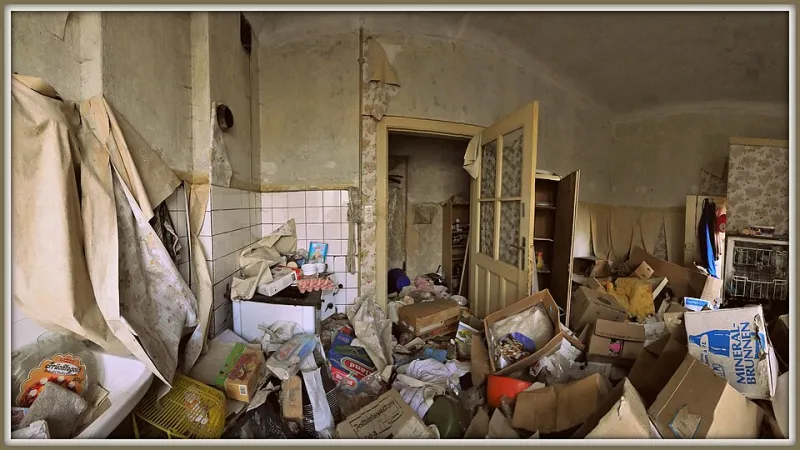
Photo: Rolf Dietrich Brecher from Germany, CC BY 2.0, via Wikimedia Commons
Here at Dnays, we are not here to sell you a beige lifestyle. We are here to talk about the drawer down the side of the kitchen: the one that opens with a bit of a shove and contains the entire history of your good intentions.
Mine is a classic. As I write this in November 2026, it still holds a corkscrew from a hotel that may or may not exist, three keys that fit nothing, a battery that could be from 2019, and a tiny plastic screwdriver from a Christmas cracker. Every time I open it, I think: I should sort that out. Then I close it and make a cup of tea. This is the British way.
Why we keep the junk
The drawer is not really about storage. It is an insurance policy. Somewhere in there is the thing you will need at 8pm on a Sunday, when the shops are shut and the internet is full of people telling you to own only three possessions. The drawer says: not today, minimalism.
That is worth defending. A home without an odds-and-ends drawer is a home that has given up on the small, useful chaos of life. But there is a difference between a useful drawer and a drawer that has become a landfill site with a handle. The trick is to tidy it without turning into a person who labels their teaspoons.
A field guide to the usual suspects
If you empty any British kitchen drawer onto the worktop, you will find roughly the same things. It is like a national inventory.
- Mystery keys. Small, brass, slightly bent. They fit a padlock, a suitcase, a shed, a bike lock, or absolutely nothing. You cannot throw them out because the moment you do, you will remember what they open.
- Dead batteries. A loose pile of AA and AAA cells, some leaking, some possibly still alive. You never know which is which, so they all live together in a sad little battery graveyard.
- Takeaway menus. For places that have changed their number, closed down, or now charge £9 for delivery. You keep them because one day you might fancy a curry and forget how to use the internet.
- Christmas cracker toys. A plastic whistle, a mini screwdriver, a puzzle ring, a small metal thing that looks like a torture device for ants. They are not useful, but they are part of the family.
- Foreign coins. A euro, a US quarter, a coin from a holiday years ago that you cannot spend and will not bin.
- Spare buttons. In a tiny plastic bag, with a thread sample attached. No one knows which garment they belong to.
- Instruction manuals. For a toaster you replaced three years ago.
- Sauce sachets. Soy sauce, ketchup, mint sauce, a single mustard. Enough to open a very small cafe.
- Odd screws, rawl plugs and a single chopstick. The drawer's equivalent of a survival kit.
The 20-minute rescue plan
You do not need a whole afternoon or a system involving a label maker. You need a timer, a bin bag and a bit of nerve.
- Empty it out. All of it. Onto a tray or the worktop. Yes, it will look worse before it looks better.
- Bin the obvious rubbish. Leaking batteries, menus for closed restaurants, manuals for dead appliances, broken cracker toys that no one will miss. Be honest.
- Make four piles. Useful, sentimental, mystery, and charity/recycling. Useful things go back. Sentimental things get one last chance. Mystery keys go into a small bag labelled 'keys - probably nothing'. Charity/recycling is for batteries at the supermarket and anything you have not used in two years.
- Wipe the drawer. This is the bit people skip. There is always a crumb situation at the back.
- Put things back in zones. Tools at one end, paperwork in a small folder, batteries in a box, sachets in a mug. You do not need fancy dividers. A clean takeaway tub works fine.
- Stop. Do not start on the next drawer. That is how the whole day goes.
What you are allowed to keep
This is not a purge. You are allowed to keep the tiny screwdriver from the cracker. You are allowed to keep one foreign coin. You are allowed to keep the mystery keys, as long as they are in one place and not loose among the tea towels.
The goal is not an empty drawer. An empty drawer is just a gap. The goal is a drawer that opens without a fight and where you can find the corkscrew when you need it. That is a modest ambition, and at Dnays we are all for modest ambitions.
Show us your weirdest find
So, what is in your drawer? We want to know the strangest thing you have found at the back of it. A key for a lock you have never owned. A takeaway menu from a place that closed before you moved in. A single plastic dinosaur. A battery from a device you cannot name.
Send us a photo or a description. We will not judge. We will probably be impressed. The British odds-and-ends drawer is a national treasure, and it deserves a proper audit every now and then. Just not on a Sunday, because that is when you need the corkscrew.