The Pinned Message and the Passive-Aggressive Parsnip: Surviving the Family Chat This Christmas
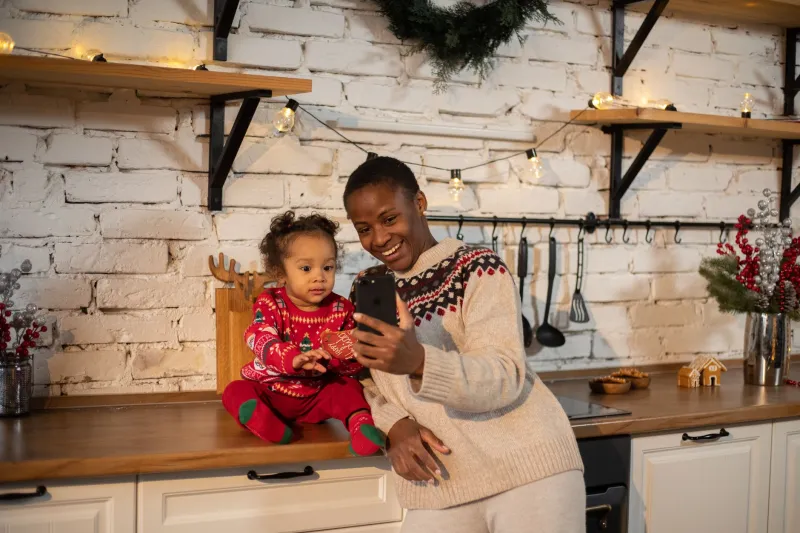
By the middle of November 2026, the family group chat has already started its Christmas warm-up. Someone has changed the group name to something with a bauble emoji. Someone else has sent a meme about Brussels sprouts. A voice note has arrived from an uncle who appears to be in a car park. It is not yet December, but the village hall is open.
That is what these chats have become, really. A village hall with better Wi-Fi and worse manners. The notices go up, the gossip circulates, the rota gets argued over, and someone leaves a charger behind. It is messy, mundane and, if we are honest, one of the small glues holding a lot of British families together.
A village hall with a pinned message
The old village hall had a cork board by the door. It had a notice about the Christmas fair, a lost cat poster and a phone number for a man who could fix a boiler. The family group chat has a pinned message, forty-three unread messages and a poll about whether we are doing Secret Santa this year.
The poll is currently tied. The poll has been tied for six days. Nobody wants to be the person who breaks the tie, because that person will be blamed for whatever happens next.
Still, the chat does the job. It shares the dates. It confirms who is bringing what. It allows someone to say, at eleven o'clock at night, 'Just to flag, the spare room is a bit chilly.' That is not a small thing. That is the modern equivalent of leaning over the garden fence.
The sprout meme economy
Every family chat has its own economy of jokes. In ours, it is sprouts. There will be a sprout meme. There will be a follow-up sprout meme. There will be a GIF of a sprout wearing a party hat, sent by someone who has never met a sprout they liked. The same jokes come round every year, and that is precisely the point.
Festive group chats are not trying to be original. They are trying to say: I am here, I am thinking of you, and I have found a picture of a parsnip in a Santa hat. The humour is broad, the timing is questionable, and the affection is real.
The hosting rota is a diplomatic document
Then comes the rota. The hosting rota is never just a rota. It is a small, tightly folded piece of diplomacy. One person offers to host, then adds a caveat. Another person says they are happy to do it, but the oven is unreliable. A third person suggests a pub, and everyone ignores them because the pub is not the point.
The passive-aggressive hosting rota is a British institution. It is conducted almost entirely in polite phrases that mean the opposite. 'We don't mind doing it again' means we do mind, a bit. 'Whatever is easiest for everyone' means please somebody else make a decision. 'I'll bring a pudding' means I have already bought a pudding and I would like a small round of applause.
The miracle is that it usually works out. The rota gets filled. The pudding arrives. Someone forgets the crackers and someone else finds a spare box in the cupboard. Christmas 2026 will be no different.
Six gentle rules for the festive run-up
- Pin the essentials. Dates, addresses, who is bringing what. The pinned message is your village noticeboard. Use it.
- Reply to the question that was asked. If someone asks who is driving, do not send a voice note about the weather.
- Keep the rota in one place. A spreadsheet is fine. A note on the fridge is fine. Six competing threads are not fine.
- Use voice notes with mercy. The uncle who only sends voice notes is a treasure, but a four-minute monologue about parking is a lot on a Tuesday morning.
- Assume good faith, especially about parsnips. Nobody is attacking your cooking. They are just trying to work out the oven timings.
- Take it offline when it gets spicy. A phone call sorts in four minutes what forty messages can make worse.
Muted, but still present
The group chat will be muted at some point. It always is. Someone will leave it on silent for a day, then come back to ninety messages, most of which are a debate about whether the dog is allowed near the tree. That is fine. The village hall does not need constant attendance. It just needs to be there.
By Christmas Eve, the chat will have done its quiet work. The plans will be roughly in place. The sprouts will be bought. The uncle will have sent one final voice note, this time from a supermarket car park, confirming that he has indeed remembered the crackers. It is not glamorous. It is not tidy. But it is ours, and that is the whole point.