Cork, Pins and Quiet Authority: A Field Guide to the Village Noticeboard
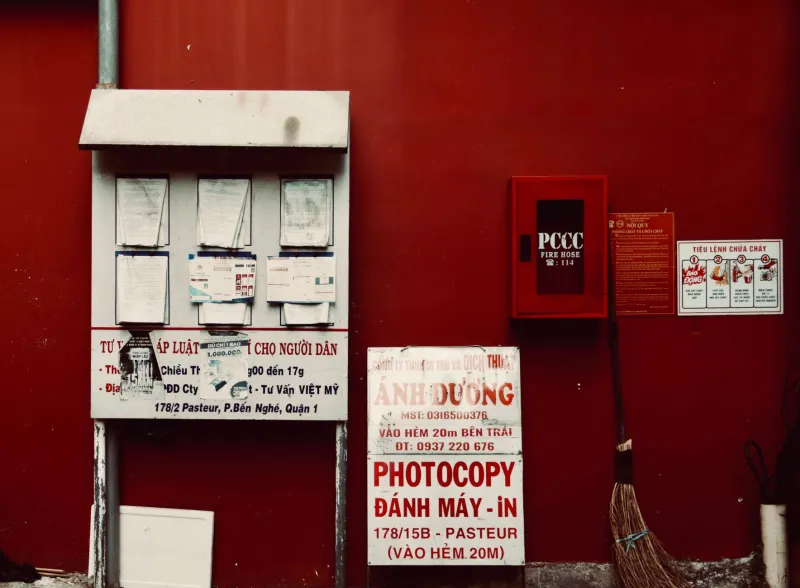
Walk into almost any village hall, corner shop or church porch in Britain and you will find a cork board doing the work of a local newspaper, a lost-and-found desk and a very slow social network. In 2026, when most of our local chatter arrives through a phone screen, the parish noticeboard remains stubbornly physical: a public square made of cork, glass and good intentions. No algorithm decides what you see. No moderator removes the slightly odd poster. Someone simply pins it up and hopes for the best.
The cork-and-pin protocol
The first rule of the noticeboard is that space is never neutral. A new notice arrives with a keen sense of hierarchy. The piano teacher has her usual corner. The parish council has the top left, where the glass catches the light. The missing cat poster goes wherever there is room, usually slightly crooked, usually with a photo taken on a kitchen table. To pin over someone else's notice is a bold move, akin to talking over the vicar at a coffee morning. You might get away with it, but people will notice.
Etiquette is mostly unspoken. Ask the shopkeeper before adding your sheet. Use four pins, not one, because a single pin is an invitation to flap. Trim your white space. Date the notice, especially if it advertises an event, because a board full of last month's quiz nights is a small civic embarrassment. And if you are removing old notices, do it kindly: take the whole sheet, not just the tear-off strip, and leave the cork looking as if nobody has been tidying. That last part is important. A noticeboard should look lived-in, not curated.
The typography of local fame
Noticeboard typography is its own dialect. There is the bold Comic Sans apology from a householder whose hedge has been trimmed too enthusiastically. There is the careful Times New Roman from the WI, with a semicolon in the right place. There is the handwritten card from a teenager offering babysitting, decorated with a small drawing of a cat that may or may not be relevant. And there is the laminated warning, always laminated, usually in capital letters, often about parking, dogs or the correct use of the recycling bins.
Local fame works in strange ways. The person who runs the Saturday coffee morning becomes recognisable by their poster alone. The piano teacher's name is known even to people who have never touched a piano. A missing cat called Biscuit can achieve a level of renown that would embarrass a minor celebrity. For a week or two, everyone knows Biscuit. Then the poster is taken down, or the corner curls, and the board moves on. It is a very British kind of fame: temporary, practical and entirely without a press officer.
Tear-off tabs and trust
The tear-off tab is the noticeboard's greatest invention. A row of phone numbers along the bottom, each one a tiny invitation to make contact. You take a tab, you put it in your pocket, you forget about it, and three days later you find it in the washing machine. But the principle is sound. The tab says: I am here, I am reachable, and I trust you not to ring me at midnight about a piano lesson.
That trust is the whole point. An online group can be moderated, reported, blocked and screenshotted. A noticeboard cannot. If someone pins up a badly spelled advert for a lawn-mowing service, the worst that happens is a raised eyebrow in the corner shop. If a notice is unfair or unkind, it tends to come down quickly, not because a moderator acts, but because the board belongs to everyone. The social pressure is quiet and local. It works precisely because you might see the person who pinned it at the bus stop.
What the board knows that the group chat does not
A WhatsApp group is excellent for urgent information: the road is flooded, the bin collection has changed, someone has found a set of keys. A noticeboard is better at the slow stuff. It records the things a village wants to remember: the yoga class that has moved to Thursdays, the church fete date, the fact that someone is looking for a secondhand pushchair. It is a living archive of small needs and small offers. You do not have to scroll past an argument to find it.
There is also something liberating about the lack of a comment section. Nobody can reply-all to a poster about a missing cat. Nobody can post a passive-aggressive follow-up at 11pm. The board simply holds the information and lets the community do what it wants with it. In an age of endless online noise, that feels almost radical.
A small civic archive
So next time you pass a village-hall noticeboard, give it a proper look. Read the tear-off tabs. Notice the laminated warning. Smile at the crooked cat poster. It is not just cork and pins. It is a small, unmoderated record of who lives nearby, what they need and what they are willing to offer. It is Britain's last social network that asks nothing of you except a quick glance and, occasionally, a drawing pin.