Mud, Manners and a Mismatched Gravy Boat: A Car Boot Sale Education
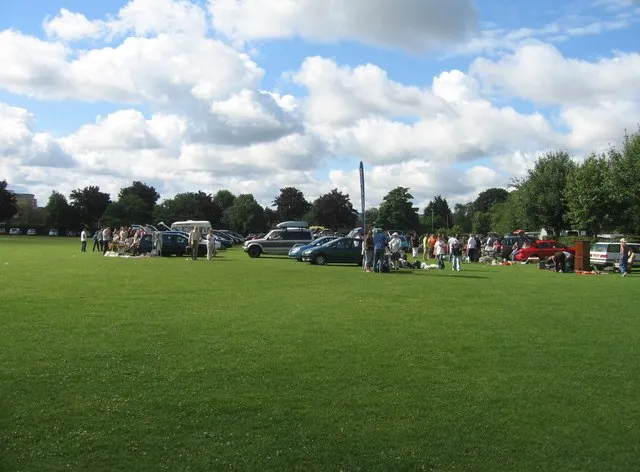
Photo: Sebastian Ballard, CC BY-SA 2.0, via Wikimedia Commons
There is something deeply unnatural about a 5:40am alarm on a Sunday. But the car boot sale does not care about your lie-in. By the time the kettle would normally be thinking about its first duty, you are in a queue of hatchbacks on a damp field, watching a man in a headtorch direct traffic with the solemnity of an air traffic controller. This is not shopping. It is a temporary village, assembled at dawn and dismantled by lunchtime, and it runs onflasks, mud and small change.
The tailgate ballet
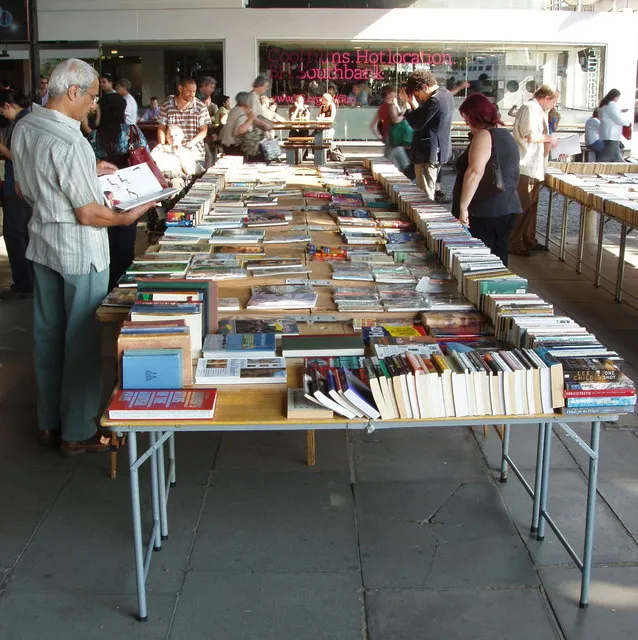
Arriving is its own ritual. The early birds ignore the sign that says no early birds, because the sign is less a rule and more a tradition. Sellers unpack in a choreography perfected over years: pasting table first, then the boxes, then the tarpaulin, then the hopeful arrangement of things that were once loved and are now £1. The good stuff goes at the front. The questionable stuff goes in a box marked 'everything 50p'. The truly baffling stuff — a single roller skate, a VHS of The Vicar of Dibley, a mug from a National Trust property nobody has visited since 2009 — goes wherever it fits.
Buyers do a slow lap before committing. This is not indecision; it is reconnaissance. You are reading the field, checking the competition and quietly noting who has a box of tools and who has merely brought their loft to a field.
The etiquette of the ask
Haggling at a car boot sale is a delicate business. It is not the same as haggling in a market abroad, where the whole thing is theatre. Here, it is closer to a neighbourly negotiation with a thin layer of frost on it. The trick is to ask without implying the seller is a bandit. 'Would you take 50p?' works. 'That's rubbish, mate' does not.
Bundling is the advanced move. Two books and a chipped teapot for a pound feels fair to everyone. The seller gets rid of three things at once; you get a story and a teapot you may never use. And then there is the 50p gamble: the moment you hand over a coin for an object whose purpose is not entirely clear. A brass thing. A boxed set of something. A mismatched gravy boat. At 50p, the risk is negligible and the anecdote is free. You are not buying a gravy boat; you are buying the rest of the afternoon saying 'but look at it, though'.
Weather-dependent optimism
The British car boot sale is an act of faith. The forecast said bright spells; the field says otherwise. Sellers arrive with tarpaulins and a fixed smile. 'It'll brighten up,' someone says, as the drizzle settles in for the duration. The flask comes out. The bacon butty van does steady business. A dog on a lead investigates a box of mismatched cutlery with the enthusiasm of an archaeologist.
This is where the optimism lives. Every seller believes the weather will hold. Every buyer believes the next stall is the one with the bargain. Both are usually wrong, and both keep going, because the alternative is being at home on a Sunday wondering what you are missing.
Reading the field
Spotting a genuine bargain is not about luck; it is about looking properly. Tools are usually a safe bet if they have weight to them. Books are worth a rummage if the seller has clearly been a reader rather than a decorator. Boxed sets of anything — cutlery, glasses, crockery — are often better value than they look, provided you actually need eight of something. Fabric, picture frames and sturdy boxes are the quiet heroes of the car boot sale, the things you buy for £2 and use for a decade.
The VHS tapes are sediment. They tell you the seller has not had a clear-out since the late 1990s. The mismatched cutlery is a warning: someone has already taken the good forks. The 'everything must go' table is either a genuine clear-out or a trap for the hopeful. And the 50p box is where the 50p gamble lives, which is why you should approach it with a limit and a loose grip on your principles.
The last lap and the leave
By eleven, the field is thinning. Sellers start to pack. The last lap is the best lap, because prices drop and people stop pretending the tarpaulin is going to save them. You may come away with a mismatched gravy boat, a book you will actually read and a vague sense that you have participated in something. The mud on your shoes is proof.
Then it is home, a cup of tea, and the quiet audit of your haul. Some of it will go to the charity shop by Wednesday. Some of it will sit in the drawer down the side for years. But the 50p gamble was worth it, because the car boot sale is not really about the stuff. It is about the field, the manners, the flask and the brief, muddy republic of a Sunday morning.