One Key, Five Doors: Notes on the Quiet Economy of the Spare-Key Pot
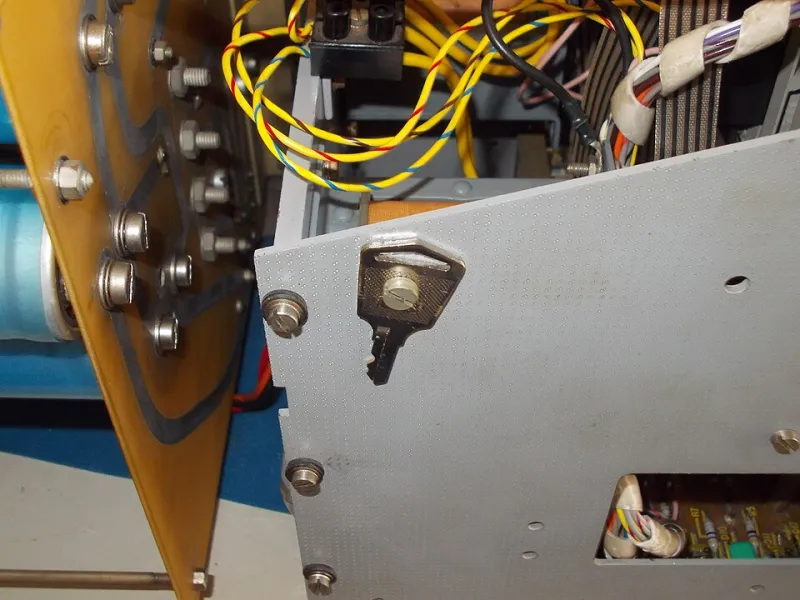
Photo: tony_duell, CC BY 2.0, via Wikimedia Commons
There is a terracotta pot by my back door that has been doing quiet administrative work for years. It holds a spare key, a curled-up spider and the sort of dust that only accumulates in things nobody is supposed to notice. Officially, it is a hiding place. Unofficially, it is a small ledger of trust, with a bit of compost on it.
Nobody ever sits you down and explains the spare-key system. You just become aware of it, the way you become aware of bin day or which neighbour will definitely comment on your hedge. One minute you are handing over a key because you are going on holiday; the next, half the street seems to know where it is, and you are watering someone else’s hanging baskets while they visit their sister in Scarborough.
The Pot That Knows Too Much
Ours started because we locked ourselves out. Not dramatically — no ladder, no smashed window, no heroic climb through a bathroom vent. Just a closed door, a set of keys on the kitchen table and a slow, cold realisation on the doorstep. Within ten minutes, next door had produced a spare from a little pot of their own, and the whole episode was downgraded from crisis to mild embarrassment.
That is the thing about spare keys. They are not really about keys. They are about the fact that a house is a fragile operation run by people who occasionally leave their brain in a coat pocket. The spare key says: you are allowed one stupid mistake, and somebody nearby can fix it without a locksmith’s invoice.
A key safe bolted to the wall is efficient, I suppose. It is a padlock with ambitions. But the pot by the door is something else entirely. It is a relationship with a lid on it.
A Very Small Mutual Insurance Policy
The British spare-key arrangement is a masterpiece of low-level organisation. It has no membership card, no annual general meeting and no newsletter. It runs on text messages that begin “hiya, just checking” and end with “no worries, kettle’s on.” It is mutual insurance paid for in plant-watering, parcel-taking and the occasional loan of a ladder.
It also has rules, most of which are never spoken aloud. You do not use the key without saying you are using the key. You do not comment on the state of the kitchen. You do not decide, off your own bat, that the hedge needs cutting or the recycling bin would look better round the side. A spare key is permission to enter, not permission to redecorate.
And when you return the key, you do it properly. Not through the letterbox in an envelope marked “key.” Not left on the doorstep under a mug. You hand it over, you say thank you, and you accept the cup of tea that is now legally required by the laws of neighbourliness.
A Field Guide to Key-Holders
Every spare-key network has its characters. Ours is no different.
There is the utterly reliable next-door neighbour, the gold standard. They know your alarm code, your bin day and the name of the cat that visits your garden uninvited. They will not lose the key. They will not flood the kitchen. They will, however, tell you that your porch light has been on since Tuesday, and they will be right.
Then there is the friend who once flooded the kitchen and still gets a key. This sounds reckless. It is, slightly. But they also once drove across town at an ungodly hour because a boiler had given up, and they arrived with a flask and a screwdriver. Trust is not a clean record; it is a fair exchange of chaos and competence.
There is the family member who lives forty minutes away and insists on having a key “just in case.” They will never use it. They will ring you from the car park to check you are out before they let themselves in to drop off a bag of apples. The key is not really for entry. It is for reassurance.
And there is the key that has been in the pot so long nobody remembers who it belongs to. It fits something. Possibly the shed. Possibly a neighbour’s back door from a previous decade. It stays because throwing it away feels like breaking a tiny, rusty contract with the past.
The Little Pot as a Local Institution
What I like about the spare-key pot is that it is gloriously unglamorous. It sits there in all weathers, doing its small job. It is not a smart lock or an app or a subscription service. It is a bit of pottery with a key in it, and it means that if the worst happens — a lost key, a stuck lock, a frantic Tuesday — you are not on your own.
In a country that often prefers a nod to a conversation, that is no small thing. The spare key is a quiet way of saying: I have noticed you. I know where you live. If you need me, I am about eight feet away, and I have a key to your house and a decent supply of tea bags.
So here’s to the pot by the door. Long may it stay slightly dusty, slightly hidden and entirely essential.